
Hello NetBird Community!
Last month I showed you the rebuilt desktop app as a release candidate. This month it's stable and out to everybody. We also pushed a client release I do recommend updating, published a success story out of Norway, and I put together three new guides. Let's dive in.
The New Desktop App is Stable (v0.75)
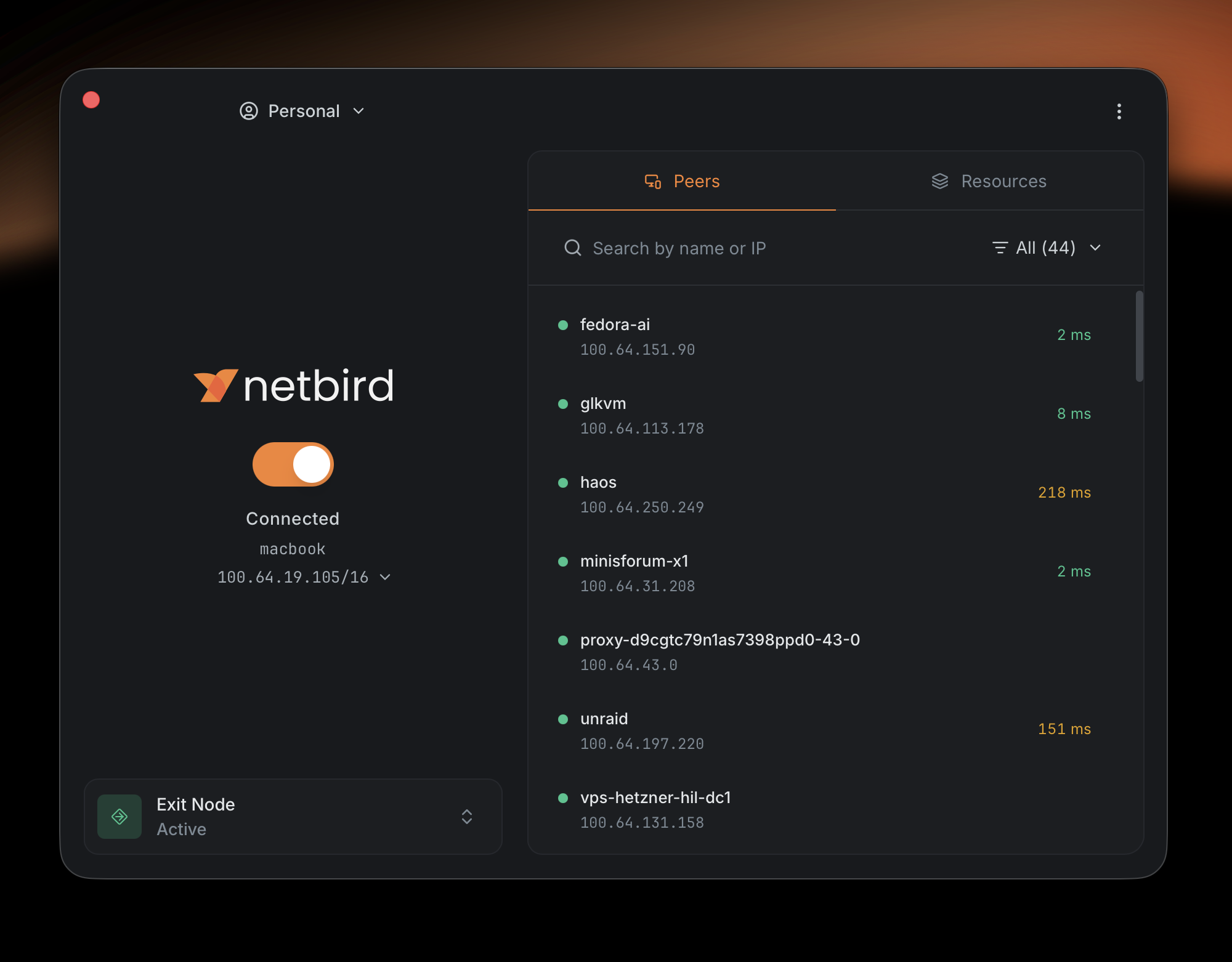
Six release candidates and a whole lot of community feedback later, the rebuilt desktop app is out of the release channel and into stable. The old Fyne interface is gone, and what's sitting there now is built on Wails 3, React, Vite, and Tailwind. The NetBird agent and WireGuard engine underneath are the same ones you've been running all along, but pretty much everything you see and click is new.
A few things made it into stable that the release candidates didn't have. MDM policy enforcement lets you push config and lock settings down across a whole fleet. Session renewal keeps your connection up instead of dropping you the moment a session expires. The interface is localized in ten languages now. And if you're self-hosting, there's a new Admin CLI for managing a server without ever opening the dashboard.
Learn more: Knowledge Hub article
NetBird v0.76
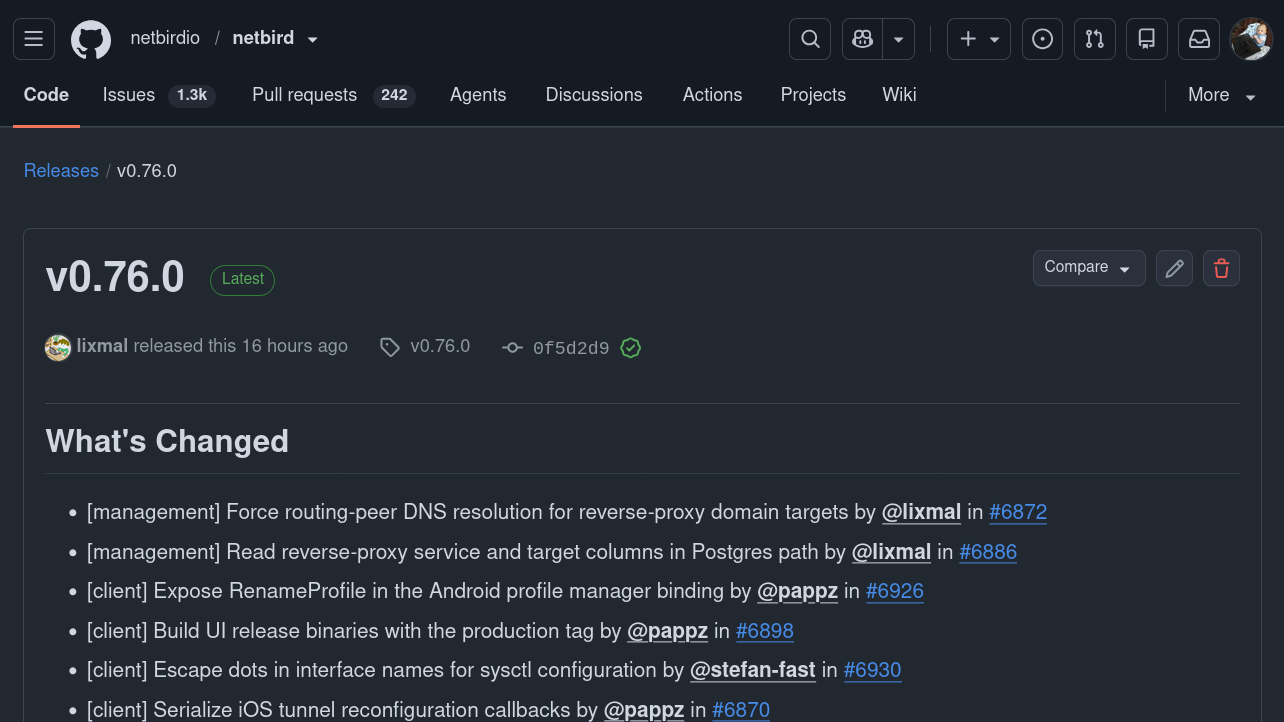
v0.76 is a small one, mostly client fixes and management server cleanup, but there's a change in here that makes it worth doing sooner rather than later. The client daemon now checks who is actually calling it using kernel-level identity checks, and the operations that need privileges actually require them now.
So if you're on anything older than v0.76, go ahead and upgrade. The write-up walks through what changed and why.
Learn more: Knowledge Hub article
Norsk Helsenett Modernizes Secure Access

Norsk Helsenett runs the national health network for Norway, we're talking hospitals, clinics, and municipalities all over the country. They came to us wanting off legacy VPNs that were getting difficult to operate.
What they moved to is identity-based access control with NetBird, where who you are decides what you can reach rather than whatever network segment you happened to land on. The operational side got a lot simpler too, and that matters when the people you're supporting are healthcare workers who just need access to get their job done.
Read the story: Knowledge Hub article
Self-Hosted AI: Hermes Agent with Private Remote Access
Self-hosted AI agents have gotten really good, and Hermes Agent is one of my favorites right now. It runs on your own hardware, manages its own models, tools, skills, and memory, and comes with a full web dashboard on top.
In this one I install it on a Linux server, keep the dashboard and the community WebUI running as systemd user services, and then put the whole thing behind NetBird. We go through access policies and the Reverse Proxy with NetBird-Only Access, so you end up with a friendly HTTPS hostname and not a single port opened to the internet.
Learn more: Knowledge Hub article
Self-Host Your Bookmarks with Linkwarden
Linkwarden is a link manager, very similar to something like Pocket, but the preservation side is the real killer feature. Every link you save gets a screenshot, a PDF, and a full single-file copy of the page, with an optional Wayback Machine snapshot on top, so your bookmarks still work even when the original site disappears on you.
We get it running with Docker Compose and then reach it from anywhere over NetBird. Access policies, the Reverse Proxy with PIN codes, and NetBird-Only Access for a private HTTPS hostname, all without opening anything up on your router.
Learn more: Knowledge Hub article
Host a Minecraft Server Without Opening a Port
Running a Minecraft server for your friends is one of those projects that starts out easy, but you run into some issues. Getting everybody else onto it is where people get stuck, because suddenly you're writing port forwarding rules and pasting your home IP into a group chat. And plenty of folks can't port forward at all, since CGNAT means there's no public IP pointing at your house to forward anything to.
So this one builds the server with Docker Compose and then covers both ways to let people in. You can put your friends on your NetBird network, which exposes nothing at all, or publish that one game port through the NetBird Reverse Proxy as a TCP service so your friends install nothing whatsoever. I get into the tradeoff between the two, plus whitelisting, a bit of hardening, and a bonus section on plugins.
Learn more: Knowledge Hub article
Thank You!
Thank you for being part of the NetBird community. Your feedback, GitHub issues, and ideas keep shaping what we build, so do keep them coming. And if you haven't already, come hang out with us on Slack or star us on GitHub .
Team NetBird
Check out the changelog to stay on top of all the product releases. Follow NetBird on LinkedIn !